Tuesday, April 13, 2010

Walt Disney's Los Angeles 1923-1931: Pedaling Past History

Editors Note: When we last left Buddy Robinson, he had just rode his bicycle past the home of Robert Disney on Kingswell Avenue.
Buddy suddenly remembers that he wants to check what's playing at the Vista Theatre, so he points his bicycle south off Kingswell onto Hillhurst Avenue.  He travels the four blocks to the corner of Hillhurst and Hollywood Boulevard where the Vista is located.
He decides that the double bill of Tailspin and The Three Musketeers is to his liking and quickly exchanges a dime for a ticket and a few hours of vintage Hollywood escapism.
It is important to remember that at this time, the movie industry was a growing and pervasive presence in the Los Feliz and Silver Lake neighborhoods, and of course in Hollywood just to the west.  Data from the 1930 U.S. Census indicates that a large number of individuals then living in these areas were associated with work within the motion picture industry.


Across the street from the Vista Theatre was one of Hollywood's then well known poverty row studios.  Monogram Studios produced such B-movie fare as Boris Karloff's Mr. Wong series, The East End Kids and The Bowery Boys and was home to numerous western matinee idols such as a young John Wayne, Tex Ritter, Hoot Gibson, Buck Jones and Johnny Mack Brown.


Walt and Lillian Disney lived for a brief time very near to this location.  The couple rented an apartment at 1307 North Commonwealth Avenue sometime during the mid-1920s.  There is no trace left of the house or building they resided in and in fact the entire 1300 and 1400 blocks of North Commonwealth Avenue no longer exist.  North Commonwealth would have intersected Sunset Drive very close to where the Monogram Studios came into being in 1931.


Today, the entire area, including the original Monogram Studio building, is part of the KCET Studios complex.  KCET is the PBS affiliate for the Los Angeles area.
After watching  movies and filling up on popcorn and Coca-Cola, Buddy pedals his bicycle north on Talmadge Street and eventually passes the former Vitagraph Studios that was sold to Warner Bros. in 1925.
Built in 1912, Vitagraph was one of the earliest of the Hollywood studios and enjoyed the presence of such film pioneers as Douglas Fairbanks, Lillian Gish, Rudolph Valentino, Mary Pickford, Cecil B. DeMille and D. W. Griffith.  ABC Television acquired the property in 1949.  Disney assumed ownership of the complex when it acquired ABC in 1996.  During the time Walt was active in the Los Feliz/Silver Lake area, the studio would have been referred to as the Warner Bros. Vitagraph or the Warner Bros. Annex.  It was located just a block away from Robert Disney's home.
A few blocks north, Buddy turns right on Franklin Avenue and pedals across the Shakespeare Bridge, a well known Los Feliz landmark.
 Just after crossing the bridge, he turns left on St. George Street.  At the intersection of St. George and Lyric Avenue, he passes two small adjacent houses that were once the homes of the Disney brothers.
Walt and Lillian resided at 2495 Lyric Avenue while Roy and his wife Edna lived next door at 2491.  Both couples moved into the small homes in 1927.


The houses were built from modified prefabricated kits manufactured by the Pacific Ready Cut Homes company.  Michael Barrier noted in his book The Animated Man, construction on the two homes began in August of 1926 and was completed by the following December.  The cost of the land and the two kit houses was estimated by Roy Disney to be approximately $16,000.

In the summer of 1932, Walt and Lillian moved into their second home, a house they had built at 4053 Woking Way in the Los Feliz Hills.  Though not on Buddy's bicycle route, the house was approximately one mile from the Hyperion Avenue studios.


Walt and Lillian lived at this location until their move to Holmby Hills in the late 1940s.  This was the home where the Disney's raised daughters Diane and Sharon.  It was also well known for its swimming pool that was perched precariously on a high hillside.  Roy O. Disney once said, "He hung this swimming pool up on the corner of this darn thing.  It's a granite hill and we were taking bets to see if it would stand."


In 1939, Walt appeared in magazine advertisements for DeSota that featured photographs taken at the Woking Way estate.

Roy and Edna Disney moved out of their Lyric Avenue home in 1934 and relocated to 4365 Forman Avenue in North Hollywood, not far from where he and Walt would build the Burbank studio at the end of that decade.  Roy would ultimately live in two other homes in that same North Hollywood/Burbank area prior to his death in 1971.

Buddy rides his bike a short distance further down St. George where he passes John Marshall High School.


John Marshall High School was opened in 1930 and its tall central tower can often be seen looming in the distance in photos of the Hyperion studio.  It has long been a favorite location of Hollywood filmmakers.  Movies such as Raiders of the Lost Ark, Grease and more recently, Transformers have used the school as a backdrop.

Studio veteran Jack Kinney noted in his biography that he and number of other studio employees lived in apartments on Griffith Park Boulevard just a few blocks away from John Marshall.  He also remembered that he and other members of the story department would sneak out of the studio to watch football games at the high school.  Kinney remembered, "We were too cheap to pay twenty-five cents for a ticket in the grandstands, and we soon discovered that by climbing up an ivy-covered bank we had a first-class, close-up view of the action on the field through a chain-link fence."  According to Kinney, the school's disgruntled principal ultimately turned on sprinklers to discourage the freeloading Disney employees.

Directly across from John Marshall, Buddy turns down Evans Street where after one very long extended block he arrives at Hyperion Avenue.  He turns left on Hyperion Avenue.  He quickly drops off some overdue books at the Hyperion Branch Station of the Los Angeles Public Library, located at 2619 Hyperion Avenue.
After leaving the library, he continues one block up Hyperion Avenue to where it intersects with Griffith Park Boulevard.  He has reached the location of the Walt Disney Studios.

We have arrived at 2719 Hyperion Avenue.


During the studios' earliest of years, the area surrounding 2719 Hyperion was a generally quiet, empty place.  Animation director Ben Sharpsteen remembered visiting for the first time in 1929:

"I walked through what was mainly a residential development, a section of town which had been laid out with streets and curbs, but which had very few homes at the time.  It was late March and the grass and weeds were very tall and they were growing up through the sidewalk in places.  It was not a street that was very much used at the time.  I thought this was a very strange neighborhood for a cartoon studio, but I finally came to a main intersection as directed and I found the number on a small building next to a service station on the corner.  Sure enough, the sign over the door read 'Walt Disney Studios.'"


In the decade that followed, the Hyperion studio grew, in what many observers described as an almost "organic" expansion.  Existing buildings were expanded and extended; nearby buildings were absorbed and additional facilities emerged on the opposite side of Hyperion Avenue.


The Disney Annex was added to the studio sometime around 1936. During the late 1930s, it was in this place that aspiring artists were typically given tryout periods to prove their talent and skills, working mainly as in-betweeners under the watchful and often harsh supervision of studio manager George Drake. Part of the training process also involved art classes taught by Don Graham.


In less than one year following Buddy's travels on that Saturday afternoon in May 1939, the Hyperion studio would be gone.  By early 1940, Walt Disney and his entire operation relocated to a sprawling new studio complex in Burbank.  Buddy's Aunt Connie did not follow the company to Burbank but instead was married later in 1940 and moved to Pasadena with her new husband.  Decades later, a supermarket would occupy the location, and the address, 2719 Hyperion, would cease to exist.
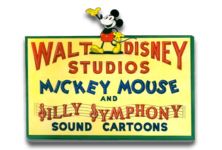
Buddy turns his bike around.  It is getting late and he needs to get home for dinner.  He pauses for a moment and looks up at the large sign on the top one of the studio buildings.  He fondly remembers his birthday in 1933 when his father brought him to this place.  He scans the surrounding street and confirms that he is alone except for the occasional passing cars.  He shyly lifts his hand and waves.  And from the sign that rises high above the address that is 2719 Hyperion Avenue, Mickey Mouse waves back.


Walt Disney's Los Angeles: 1923-1931 is adapted from a presentation made April 10, 2010 at the first 2719 Hyperion Sweatbox. 

Our acknowledgments and thanks to the following individuals who provided assistance and resources that made the Sweatbox presentation and the subsequent site posts possible:  Bob Cowan, Phil Sears, Dave Smith, Jeff Kurtti, Donnie O'Neal, Scott Otis and Diane Disney Miller.

It is impossible to overstate the value and importance of Michael Barrier and his near-definitive Walt Disney biography The Animated Man.

The photo archive at the Los Angeles Public Library was invaluable in our efforts.

Monday, April 12, 2010

Walt Disney's Los Angeles 1923-1931: A Bicycle Ride to Kingswell

At roughly the same time Mickey Mouse premiered at the Colony Theatre on November 18, 1928, Elsie Robinson gave birth to William Arthur Robinson in Los Angeles, California.  He wasn't even a day old when his father, newspaperman Chester Robinson, bestowed upon him the nickname "Buddy."  Buddy and his parents lived in the Los Feliz neighborhood of Los Angeles, just east of Hollywood.
On his fifth birthday in 1933, Buddy and his father rode the Red Car over to Glendale where the Alexander Theatre was located.  It was there that Buddy saw his first Mickey Mouse cartoon.
 
On the way home, they got off the Red Car early and walked down a street past a few vacant lots and turned a corner onto Hyperion Avenue.  At the corner was a gas station, and next to it on the left was a series of large buildings.


Buddy remembers, "My Dad lifted me up to sit on his shoulders and then he pointed to a large sign perched on top of one of the buildings.  There on the sign was Mickey Mouse, happily waving down to my father and me as we stood looking up from the sidewalk.  It was silly, but we both happily waved back."  Buddy and his father were standing in front of the Walt Disney Studios, located at 2719 Hyperion Avenue in the Silver Lake area of Los Angeles.


2719 Hyperion.  It is a simple address that has evolved into a near-iconic term for Disney historians, journalists and enthusiasts.  And we would like to as modestly as possible think that we have contributed to that evolution over the course of the last four years of 2719 Hyperion.com.  The history of the Hyperion Avenue studios is generally well-documented; in fact, two well-known Disney historians are each currently writing books that focus on that very subject.  So in discussing 2719 Hyperion, we thought we would approach it more in a geographical context.  This is because the area immediately surrounding the Hyperion Avenue location is nearly as rich in Disney history as the studio itself.  These neighborhoods  encompass an area of approximately two square miles just east of Hollywood.


We are going to navigate this geography by means of young Buddy Robinson, who we just introduced a few moments ago.  In the interests of full disclosure, Buddy Robinson is a wholly fictional entity.  We have created Buddy as a way to lift this exploration above the level of a dry dissertation and hopefully create a more entertaining, but still informative presentation.

As we explore the area surrounding 2719 Hyperion, as a point of reference, we are going to use this 1939 street map of Los Angeles, that was produced and distributed by the Standard Oil Company of California.  The Walt Disney Studios was closely affiliated with Standard Oil during this time period.  In 1939, Disney produced a series of four-page Travel Tykes comic book premiums available at Standard Service Stations.  The studio also produced a commercial cartoon short entitled The Standard Parade that tied into this promotion.  Just to note, within the 2719 Hyperion Archives there is a series of posts that feature Travel Tykes newspaper ads that were featured in the Los Angeles Times during the spring of 1939.

We are going to follow Buddy Robinson as he spends a Saturday afternoon during the spring of 1939 traversing his neighborhood.  But before we do that, we are going to briefly jump back in time to that day in 1933 when Buddy and his father visited the Alexander Theatre in Glendale.
The Alexander Theatre is especially significant to early Disney history.  As it was located just a few miles from 2719 Hyperion Avenue, Walt Disney used the Alexander Theatre numerous times throughout the years to run preview screenings of many of his cartoon short subjects. In their book Silly Symphonies, authors Russell Merit and J.B. Kaufman document preview screenings of Disney cartoons there as early as 1931 with the shorts Egyptian Melodies and The Clock Store.  Studio veteran Jack Kinney noted, "When a picture was finished, it was usually previewed at the Alexander Theater in Glendale to get audience reaction. After the show, the boys and girls would gather in the lobby and discuss the various scenes with Walt."
But now let us return to the spring of 1939.  Buddy Robinson is leaving his house located at 4410 Clarissa Avenue in Los Feliz.  Buddy's home was located about ¾ of a mile from the Hyperion studio as the crow flies; traveling by street routes added an additional ¼ mile to the journey.  Buddy's Aunt Connie (his mother's sister) who lived with his family would frequently walk that distance on a daily basis; she was employed as an ink and paint girl at the Disney Studio.
 
Buddy travels a couple of blocks west of his home to Hillhurst Avenue where he turns south; a block later he turns west onto Franklin Avenue where he travels two more blocks to Vermont Avenue and a business district that includes stores, restaurants, and the Los Feliz Theatre.

He might stop in and pick up some candy at either the Los Feliz Mart or the Holly Mont Market; and he'll probably run into the Owl Drug Company and buy a comic book or two if he has enough money.  He checks to see what's playing at the Los Feliz Theatre and decides that the double bill of St. Louis Blues and Girl Downstairs is not to his liking. 

Shortly after they were married in 1925, Walt and Lillian Disney lived briefly in an apartment located a half block away from these shops at 4637 Melbourne Avenue.

Les Clark, one of Disney's legendary "Nine Old Men" met Walt Disney for the first time at a small restaurant near the intersection of Vermont and Kingswell.  Clark told Disney historian Don Peri, "It was a malt shop, confectionary store, and they served lunch and other meals."  He remembered, "I met Walt in the summer of 1925.  He used to come in and have lunch almost every day.  When I graduated from high school, I got in touch with him and asked him for a job."

Veteran Warner Bros. animator Friz Freleng remembered renting a room in a house on Vermont Avenue when he briefly worked for Disney in 1927.  Freleng noted that Roy Disney would pick him up and drive him to the studio every morning, but added, "But after work we had to walk home, because he didn't care when we got home, but he did care when we got to work!" 
Buddy rides his bike one block south of Melbourne Avenue and turns east onto Kingswell Avenue.  Here he will pass one of the most significant places in Disney history.
Near the corner of Vermont and Kingswell is the location where Roy Disney and Walt Disney established the Disney Brothers Studio on October 8, 1923.  The fledgling studio shared space with a real estate office at 4651 Kingswell Avenue.

The initial rent for the location was $10/month.  The studio opened for business on October 16, 1923, the day after Walt accepted New York distributor Margaret Winkler's offer to distribute the new Alice Comedies series.  Walt and Roy, and newly hired ink and paint girl Kathleen Dollard comprised the entire staff of the operation.  On January 14, 1924, the future Mrs. Walt Disney, Lillian Bounds was added to the staff as a cel painter.  Walt and Lillian's daughter, Diane Disney Miller, remembered her mother speaking of the couple's first kiss, that likely happened at Kingswell Avenue.  ". . . it was very sweet . . . she was taking dictation from him, and he leaned across the desk and kissed her.  I find that very romantic.  I don't think I've ever told anyone other than family about that, simply because no one seemed interested."


In February of 1924, the studio moved into larger quarters directly next door at 4649 Kingswell where they were able to display the Disney Brothers name on a storefront window. 

Here is a view of how this area looks today.


A copy store now occupies the location that was once briefly, the Disney Brothers Studio.

As Buddy heads further east on Kingswell, he comes to the home of Robert Disney, uncle to the Disney brothers. 
It was here, at 4406 Kingswell Avenue, where Walt first lived upon arriving in southern California in late summer of 1923.  Robert Disney had moved to Los Angeles the prior year and earned a living working in real estate.  For a brief time, Walt worked out of his uncle's garage.

It was from this location that October 16, 1923 that Walt wrote the family of Virginia Davis in Kansas City, requesting that they come to Hollywood so Virginia could star in the new series of Alice Comedies.
Walt also had printed stationary that used the 4406 Kingswell address.  He used a piece of that stationary for a subsequent letter to Mrs. Davis on October 24, 1923.


For a little over a year, Walt and Roy lived together in a rented room across the street at 4409 Kingswell, the residence of Charles and Nettie Schneider, and then later at an apartment at an unknown address.  As roommates, the two proved quite incompatible; so much so that a frustrated Roy sent for his Kansas City sweetheart, Edna Francis.  The two were married at Uncle Robert's home on April 11, 1925.

End of Part One


Walt Disney's Los Angeles: 1923-1931 is adapted from a presentation made April 10, 2010 at the first 2719 Hyperion Sweatbox.

Buddy Robinson's bicycle ride through Los Feliz and Silver Lake continues tomorrow here at 2719 Hyperion. 

Saturday, April 10, 2010

The True-Life Winston-Hibler
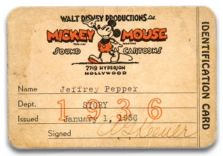
By Jeffrey Pepper
Originally published  October 8, 2007

While he certainly has one of the most recognizable voices in the history of Disney entertainment, Winston Hibler has ironically remained one of the more quiet giants behind so many studio success stories and productions both animated and live action. Most famous as the narrator of the True-Life Adventure films, Hibler’s creative efforts however, extended far beyond the award-winning nature documentaries that were the hallmark of his more than thirty-year career with the Disney Studios.


A Pennsylvania native who arrived in Hollywood in the early 1930s to pursue an acting career in motion pictures, Hibler ironically found work with Disney in 1942 behind the cameras. He began his studio career as a camera operator, but quickly became a technical director on many of the government-commissioned training films being produced for the U.S. military.

Hibler’s first entertainment-based endeavor was writing the Johnny Appleseed sequence from the 1948 package feature Melody Time. One of the most underrated gems of Disney animation, Johnny Appleseed was an auspicious debut that Walt Disney himself took notice of. Hibler quickly found himself fast-tracked into feature animation, providing story content for films such as The Adventures of Ichabod and Mr. Toad, Alice in Wonderland, Cinderella, Peter Pan and Sleeping Beauty.

But paralleling his contributions to the animation department was his involvement in a series of films that would ultimately become his legacy at Disney for work both as a performer and as a writer. While the True-Life Adventures literally pioneered the nature documentary genre and collected countless awards and accolades, decades later it seems that it is Hibler’s gentle, storyteller-based narrations that are best remembered by a generation of baby boomers and their parents. And it was a job Hibler never intended to do.

When preparing Seal Island, the first in the True-Life Adventure series, Hibler recorded a test track to check for story continuity. According to Hibler’s family, Walt previewed Seal Island for his wife Lillian using Hibler’s “scratch track”. When Lillian later viewed a cut sans-Hib, she pointedly asked Walt what happened to the first guy. Hibler subsequently voiced the final theatrical cut and went on to narrate all the remaining True-Life Adventure films, as well as the People and Places travelogues and numerous episodes of the Disney television program. With the exception of Walt himself, his is likely the most famous non-character voice in the history of the studio.

But the brunt of Hibler’s creative energies on the True-Life films was channeled behind the cameras. While starting as a writer, his subsequent experience allowed him to grow a career that came to encompass producing and directing credits as well. He was the force behind the vast majority of the live-action animal-themed episodes on the Wonderful World of Disney during the 1960s and 1970s, and the likes of Charlie the Lonesome Cougar, Lefty the Dingaling Lynx, and Ida the Offbeat Eagle became staples of Sunday evening entertainment.

Impressively, at the same time Hibler was also largely involved in the studio’s live action feature slate as well. Producer credits appear on such films as Those Calloways, The Ugly Dachshund, Follow Me Boys! and The Island at the Top of the World. He was working on early concepts for what would ultimately become The Black Hole when he passed away in 1976.

Hibler’s talents turned up in other places as well. He contributed lyrics to songs such as "Following the Leader" from Peter Pan and "I Wonder" from Sleeping Beauty. But what is likely one of his most famous and widely heard (and for the most part uncredited) works was this notable speech written for Walt in 1955:

“To all who come to this happy place – welcome. Disneyland is your land. Here age relives fond memories of the past and here youth may savor the challenge and promise of the future. Disneyland is dedicated to the ideals, the dreams, and the hard facts that have created America, with the hope that it will be a source of joy and inspiration to all the world.”

While in the past score of years, people such as Marc Davis, Mary Blair, John Hench, Frank Thomas and Ollie Johnston and numerous other studio and Imagineering legends have rightly and prominently been given recognition that was long overdue, Winston Hibler’s legacy of contributions seems to still remain on the periphery of Disney history. While his lack of extensive animation and theme park notoriety has likely kept his profile lower than that of many of his contemporaries, he was certainly a cornerstone of the Disney Studio for many, many years. His creative impact extends far beyond the True-Life Adventure narrations he became most noted for.

Images © Walt Disney Company

From the Jungle Cruise queue area at Walt Disney World's Magic Kingdom.

Tuesday, April 06, 2010

Windows to the Past: Newsboys in Tomorrowland

Brothers Mike and Dick Steenberger pose for a Los Angeles Examiner photograph at Disneyland on May 25, 1958.  The siblings were treated to a day at the park as their prize for winning a newspaperboy competition sponsored by the Examiner.  The two are holding a model of the TWA Moon Rocket that looms distinctly behind them.  The photograph is part of the Los Angeles Examiner Negatives Collection of the USC Digital Library.

Saturday, April 03, 2010

Long Ago Magic Along 31st Street in Kansas City
By Jeff Pepper
Originally published February 4, 2008

A short time back, 2719 Hyperion reader Steve Pierson shared with me photographs he had taken on a recent visit to Kansas City, Missouri. Walt Disney lived in that Midwestern city during his youth, and it was there as a young man he established his first animation studio. Steve sought out some of the landmarks associated with this period of early Disney history, seeking to identify places such as Walt's childhood home and the locations of the early Laugh-O-Grams Studios. Steve then very generously gave me permission to use the pictures in a post detailing the Kansas City of Walt Disney's formative years. 

What began as the simple task of putting together a post showcasing Steve's efforts, quickly grew into a geographical and historical research vignette encompassing vintage photos, satellite imagery and resources such as The Animated Man by Michael Barrier and Walt in Wonderland by Russell Merritt and J. B. Kaufman. Having never been to Kansas City, I wanted to be able to better understand Walt's time there in a geographical context. I was also curious to discover just how much of Walt Disney's Kansas City had survived into the 21st century.

Michael Barrier visited Kansas City a few years back and noted, "Walt Disney's old neighborhood is so badly blighted—and so radically different from what he knew—that making that imaginative leap back to 1922 is, I'm afraid, very difficult." Barrier's observation is sadly very accurate. But despite the urban decay of the area, vestiges of Walt's life there do remain. And out of one of those vestiges, a project of both historical commemoration and neighborhood renewal may hopefully be realized some time in the near future.

Walt Disney arrived with his family in Kansas City in the spring of 1911. Their first residence was a rented house at 2706 East 31st Street, in a neighborhood a few miles southeast of downtown. For the next twelve years, the very significant events of Walt's life would transpire within a twenty-block stretch of that particular boulevard.

31st Street would form the southern border of Kansas City Star delivery route that Elias Disney would purchase that following summer. The area of route stretched north to 27th Street and was bordered on the west by Prospect Avenue and on the east by Indiana Avenue. Walt, his brother Roy, and Elias would deliver morning and Sunday newspapers to over seven hundred customers. In September of 1911, Walt enrolled at the nearby Benton Grammer School. He was required to repeat the second grade despite having completed that level while still living in Marceline. Eleven years later, he would audition students from that school for roles in Tommy Tucker's Tooth, an educational film commissioned by a local dentist. Benton student Jack Records, then eleven years old, won the part of Jimmie Jones. The school closed in 2002 and subsequently became the DA Holmes Apartments.

Two blocks away from the Benton Grammer School, Walt and a childhood friend set up a pop stand at the corner 31st and Montgall during the summer of 1912. According to the friend, "It ran about three weeks and we drank up all the profits."

No trace remains of the Disney family's original Kansas City residence on 31st Street. In the fall of 1914, Elias Disney purchased a small house a few blocks east at 3028 Bellefontaine Street just off 31st Street. That home would remain in the Disney family until 1921, when Walt's oldest brother Herbert moved his family to Portland, Oregon. Elias and Flora Disney followed their son west a few months later. The house on Bellefontaine remains to this day, as does the garage that Elias Disney built sometime in 1920. It was in this garage that Walt produced the Newman Laugh-O-Grams and later Little Red Riding Hood, the first independent Laugh-O-Gram cartoon.

When the house and garage at Bellefontaine became unavailable, Walt took to renting rooms and set up studios in a few different locations in an area surrounding the intersection of 31st Street and Troost Avenue, about 20 blocks west of his childhood neighborhood. A now somewhat iconic design that graced an envelope shows the 3028 Bellefontaine address scratched out and replaced with a handwritten "3241 Troost," undoubtedly the first of those locations.

In early 1920, Walt took a job with the Kansas City Slide Company that was located at 1015 Central Street. The job paid forty dollars a week. Later that year, that company moved to a location on Charlotte Street and became the Kansas City Film Ad Company. The building on Central Street still survives in the heart of downtown Kansas City. 2249-51 Charlotte Street has since become the location of the Truman Medical Center and Children's Mercy Hospital.

In May of 1922, Walt incorporated Laugh-O-Grams Films and set up the new studio on the upper floor of the McConahy Building located at 1127 East 31st Street. The McConahy Building survives still, and has become the focus of a grass roots restoration and urban renewal effort, the details of which can be found at the website Thank You Walt Disney. Walt often took his meals at the Forest Inn Cafe on the first floor of the building, the restaurants owners frequently extending him much needed credit. It was at this location that Walt and his staff produced the Laugh-O-Grams series as well as Tommy Tuckers Tooth and the "Song-O-Reel" Martha, a live action sing-along. The Studio was just beginning production of the first Alice comedy, Alice's Wonderland in June of 1923, when a lack of rent money forced them from the building.

Some sources assert that the studio moved to the nearby Wirthman Building at the corner of 31st Street and Troost. That building was also home to the large and elaborate Isis Theater, whose resident organist was Carl Stalling. Stalling's musical talents would be employed notably and famously by Warner Bros. in Hollywood some years later. But according to Michael Barrier in The Animated Man, it is likely that Walt returned to one of his former locations at 3239 Troost Avenue. It would have been there that the studio wrapped up production on Alice's Wonderland, and Walt Disney and Laugh-O-Grams Films essentially went broke. Shortly thereafter, Walt headed for Hollywood, while former colleagues Hugh Harman, Rudolf Ising and Max Maxwell launched their own studio within the walls of the Wirthman Building. Arabian Nights Cartoons would purchase and employ many of the assets and equipment of the former Laugh-O-Grams studio.

The Wirthman Building and the Isis Theater went on to experience tragedy and adversity over the next five decades. The theater survived fires in 1928, 1939 and 1954. In March of 1970, the Isis became the center of racial unrest and rioting, and closed permanently shortly thereafter. Other tenants continued to occupy the Wirthman Building but it was ultimately demolished in 1997. A mural by Kansas City artist Alexander Austin was unveiled on the wall of an adjacent building in 2006, celebrating the history of Troost Avenue. Images of Walt Disney and Mickey Mouse are depicted on the design.

Friday, April 02, 2010

A Day at Disneyland - 1963

It was a cardboard box hidden in a corner of an attic, but because of its contents, it quickly became a marvelous time machine piloted by the spirit and memories of a late family member.  It now represents my happiest visit to Disneyland, an intangible but still emotionally charged journey made possible by a few pieces of ephemera, stored away by someone who, though now gone, remains ever so dear to me.

My father-in-law, Tony Mangano, passed away in January of 2009 after a prolonged battle with cancer.  He was a kind, loving and generous individual who is greatly missed by the family and friends he left behind.  He would no doubt be embarrassed by this sentimental testimonial from me on his behalf.

Tony was not one to callously discard even the most insignificant of items and his attic was filled with numerous popular culture mementos from his travels across the 20th century.  The items collected from one of his more notable journeys, a cross-country vacation taken during the summer of 1963, are what we discovered in the aforementioned cardboard box shortly after his death.  And mixed among this collection of road maps, brochures, postcards and matchbooks was evidence of a visit to Disneyland that occurred on August 20th of that year.  Needless to say, for me personally it was a joyous, enlightening and emotionally charged discovery.

Here is the Disneyland that Tony experienced on that summer day in 1963, as represented by the items he carefully preserved upon his return home.

This folder-map provided Tony with a basic introduction to the geography of the park and various guest services offered.

A second small flier outlined guided tour and ticket options.  The Big Ten Ticket Book (Admission to Disneyland and tickets to 10 attractions)--just $3.95.  Spend an extra dollar and get the The Deluxe 15 Ticket Book with an additional five attraction tickets.  A two-hour "Happiness Tour" cost a mere $5.00.

The flier also featured a promotional piece dedicated to the 4th Annual Dixieland at Disneyland that took place on Friday, September 27 and Saturday, September 28.  Al Hirt was the biggest name listed among the performers and the Firehouse Five +2 was also featured.  For $5.25, a Dixieland ticket gave a guest admission to Disneyland and unlimited use of all attractions (except the shooting galleries, of course).


One of the highlights of Tony's visit was very likely The Enchanted Tiki Room which had just premiered two months earlier on June 23, 1963.  The Tiki Room was beyond even E-ticket status that summer.  As this brochure indicates, Tiki Room tickets were not included in Disneyland Ticket Books and had to be purchased separately at the Gateway to Adventureland.
Tony used two Courtesy Guest Ticket Books for his day at Disneyland.  Each included five tickets that could be redeemed at any Disneyland attraction, including interesting enough, The Enchanted Tiki Room.

Tony used the Adventures in Disneyland checklists on the inside back covers of the ticket books to document his day at the park.  (Editors note: it appears the ticket books do not match the 1963 visit; I am currently attempting to determine if Tony made a subsequent visit later in the decade.)   He checked off seven of the ten attractions he visited:
  • Great Moments with Mr. Lincoln
  • Skyway to Fantasyland
  • Submarine Voyage
  • SF & D RR Trains through Grand Canyon & Primeval World
  • Jungle Cruise
  • Monorail via Disneyland Hotel
  • Mark Twain Steamboat
Then a bachelor in his early thirties, Tony apparently had no interest in the more whimsical attractions of Fantasyland.  However, knowing of his lifelong passion for science and mechanics, I have no doubt that he experienced the various free shows and exhibits such as Monsanto's House of the Future, America the Beautiful and the Monsanto Hall of Chemistry.  I also imagine that the Moon Rocket was where he used one of his undocumented tickets.

I imagine that Disneyland was one of the highlights of my father-in-law's vacation back during the summer of 1963.  In a small way, he has extended his experience to us nearly five decades later.

Editor's Note: We will be sharing more pop culture artifacts from Tony's Attic on our companion site Boom Pop! in the days and months ahead.  You can currently see Tony's Tom Mix Ralston Straight Shooters of America Secret Manual on this recent Boom Pop! post.

Thursday, April 01, 2010

Welcoming Back Henry Selick and Stop-Motion Animation


Variety is reporting some great, great news today.  Disney is welcoming back animation director Henry Selick who previously directed the Disney films Nightmare Before Christmas and James and the Giant Peach.  According to Variety's online site, Selick has struck an exclusive long-term deal to make stop-motion features for Disney/Pixar.

Selick enjoyed both critical and box-office success with Coraline last year, and it appears he is very exited to be reunited with longtime friends and colleagues John Lasseter and Brad Bird.  The article states that Selick, " . . . will set up shop in the Bay Area, where he plans to write and direct features based on both original ideas and literary properties," and that he, " . . . hopes to benefit from the Pixar brain trust and technology, but will continue to produce toons using his trademark stop-motion style."

After James and the Giant Peach performed below company expectations in 1996, Selick remembers Disney exec Dick Cook dismissing stop-motion and stating that it was no longer a viable medium.  Similar short-sightedness on the part of Disney executives shut down the production of traditional animation at the studio a number of years later.  I am by no means a troll when it comes to computer-generated animation but I have to say that I am truly elated by this development.  At a time when CG animation is overpowering in its penetration of the marketplace, it is gratifying to see films such as Coraline and Fantastic Mr. Fox achieve both commercial and critical recognition, and it is equally gratifying to see Disney again embrace a style of animation that continues to have the power to enchant and entertain.